

How Insertion Sequence-Mediated Gene Amplification Helps Acinetobacter baumannii Adapt to the Host
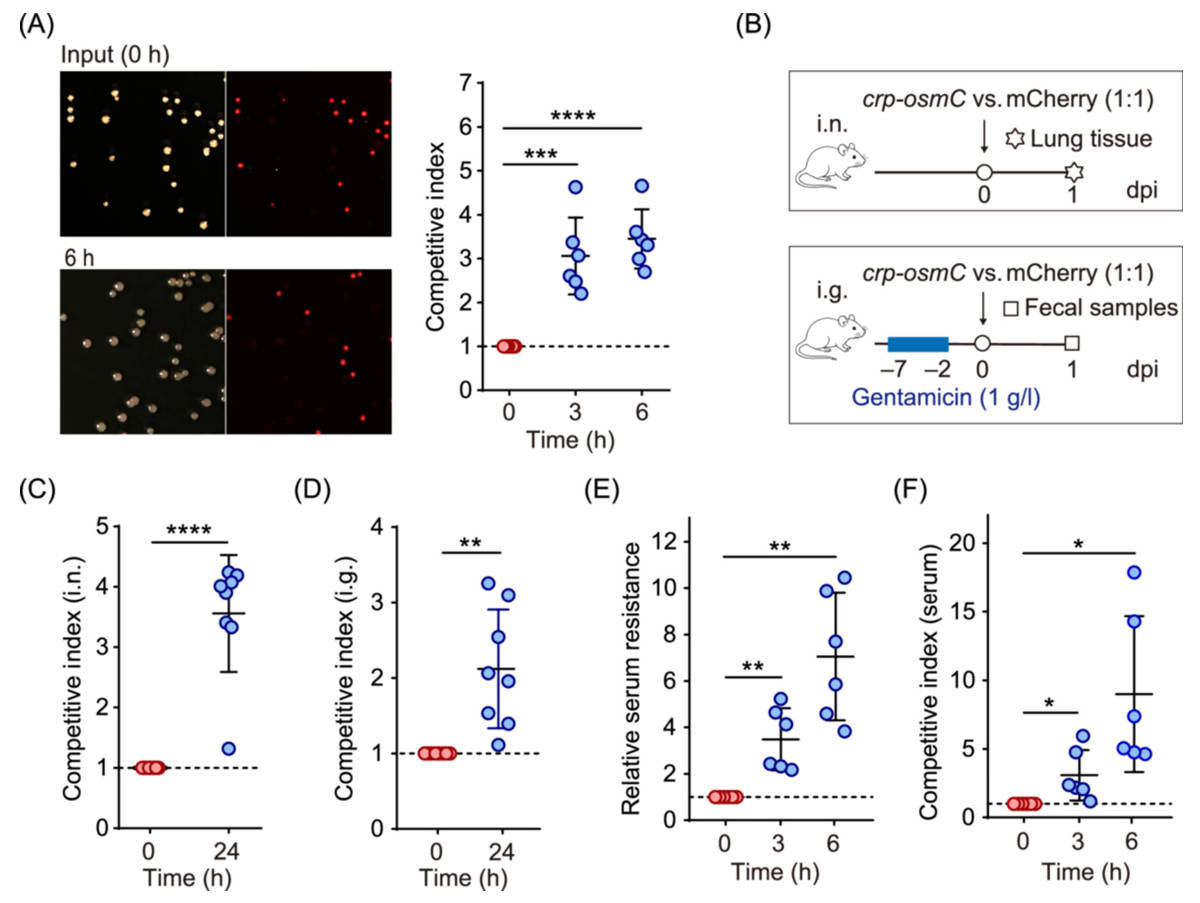
Increased crp-osmC copy number enhances competitive fitness, host colonization, and serum survival in Acinetobacter baumannii.
GA, UNITED STATES, October 13, 2026 /EINPresswire.com/ -- Acinetobacter baumannii is a major nosocomial pathogen with a remarkable capacity to adapt to both hospital and host environments. In this study, the researchers identified ISAba1-mediated amplification of the crp-osmC gene cluster as a previously unrecognized mechanism promoting host-associated fitness. Increased crp-osmC copy number enhanced bacterial growth, competitive fitness, serum survival, and colonization in mouse models. Transcriptomic analyses further linked this amplification to changes in metabolic flexibility and nutrient acquisition. Interestingly, the fitness advantage was accompanied by reduced biofilm formation and increased susceptibility to several antibiotics, revealing a potential evolutionary trade-off between host adaptation and antibiotic resistance in A. baumannii.
This study was led by Yuqin Song and Jie Feng from the Institute of Microbiology, Chinese Academy of Sciences. The researchers investigated how insertion sequence (IS)-mediated gene amplification contributes to the adaptability of Acinetobacter baumannii, an important nosocomial pathogen known for its multidrug resistance and persistence in clinical environments.
By analyzing 582 complete A. baumannii genomes, the researchers found that ISAba1 was the insertion sequence most frequently associated with gene amplification. In addition to well-known antimicrobial resistance genes, they identified a recurrently amplified crp-osmC gene cluster flanked by ISAba1 elements. This genetic structure was designated the composite transposon Tn7691. Further analysis of 7,490 A. baumannii genomes revealed a strong association of Tn7691 and crp-osmC amplification with the globally prevalent high-risk ST2 lineage and its single-locus variants.
To determine the biological significance of this amplification, the researchers experimentally increased the copy number of the crp-osmC cluster in A. baumannii. The amplified strain showed improved growth at later stages and a clear competitive advantage during in vitro co-culture. More importantly, crp-osmC amplification enhanced bacterial fitness in mouse pulmonary infection and intestinal colonization models. The amplified strain also showed substantially improved survival and competitive fitness in mouse serum, supporting a role for this genetic alteration in host-associated adaptation.
Transcriptomic analysis provided further insight into the underlying mechanisms. crp-osmC amplification was associated with increased expression of genes involved in phenylalanine metabolism, siderophore biosynthesis, and sulfur metabolism. These changes may improve metabolic flexibility and nutrient acquisition under nutrient-limited host conditions. The researchers further demonstrated that CRP retained its DNA-binding activity and directly bound the promoter of the siderophore-associated bas gene cluster, supporting its regulatory role in iron acquisition.
Notably, the adaptive advantage came with apparent costs. The amplified strain exhibited reduced expression of several genes involved in pili and biofilm formation, accompanied by decreased biofilm formation. Unexpectedly, crp-osmC amplification also increased susceptibility to multiple antibiotics. These findings suggest that enhanced host-associated fitness may be accompanied by a trade-off in antibiotic resistance.
Together, the study expands the conventional view that insertion sequence-mediated gene amplification primarily drives antimicrobial resistance. It demonstrates that ISAba1-mediated amplification can also reshape host-associated fitness, providing new insights into the genomic plasticity, adaptive evolution, and clinical success of A. baumannii.
References
DOI
10.1002/mlf2.70105
Original Source URL
https://doi.org/10.1002/mlf2.70105
Funding information
This work was supported by the National Key Research and Development Program of China (Grant No. 2022YFC2303900) and the National Natural Science Foundation of China (Grant No. 32300162).
Lucy Wang
BioDesign Research
Legal Disclaimer:
EIN Presswire provides this news content "as is" without warranty of any kind. We do not accept any responsibility or liability for the accuracy, content, images, videos, licenses, completeness, legality, or reliability of the information contained in this article. If you have any complaints or copyright issues related to this article, kindly contact the author above.
